Mystery Picture: a hidden picture reveal game for any lesson
A hidden picture reveal game: each right answer removes a numbered piece, and the first team to name the picture wins a bonus. Any subject, free, one screen.
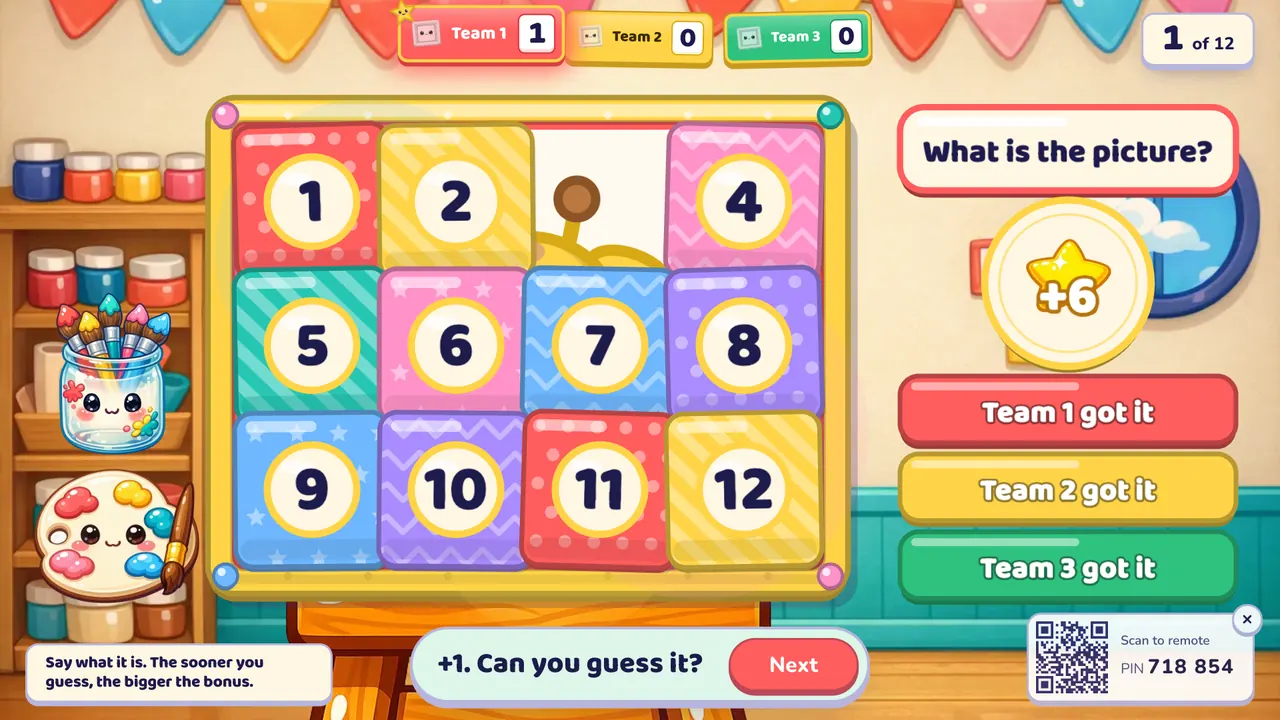
Mystery Picture is a hidden picture reveal game for the classroom. A picture sits under twelve numbered pieces of paper; every right answer lets a team peel one off, and the first team to name the picture wins a bonus that shrinks as more of it shows. It works with any subject and any age, and the moment of the guess keeps the whole class watching.
At a glance
| Players | The whole class in 2–4 teams free (up to 8 with Pro) |
| Time | 10–15 minutes for 12 questions |
| Works with | English (picture, word, listen, spell, meaning, sentence order, your own questions) and every subject: multiple choice, true/false and open questions |
| Best for | Review before a test, any subject, big classes, a calm game that still feels exciting |
| You need | One screen (projector, TV or touch display) and your phone as the remote |
How to play Mystery Picture
- Make or pick a question set. Snap a textbook page, paste a word list, type a topic or paste your own questions, or open a free set from the library.
- Pick Mystery Picture, set the teams and start. The screen shows an easel with a covered picture and a "got it" button for each team.
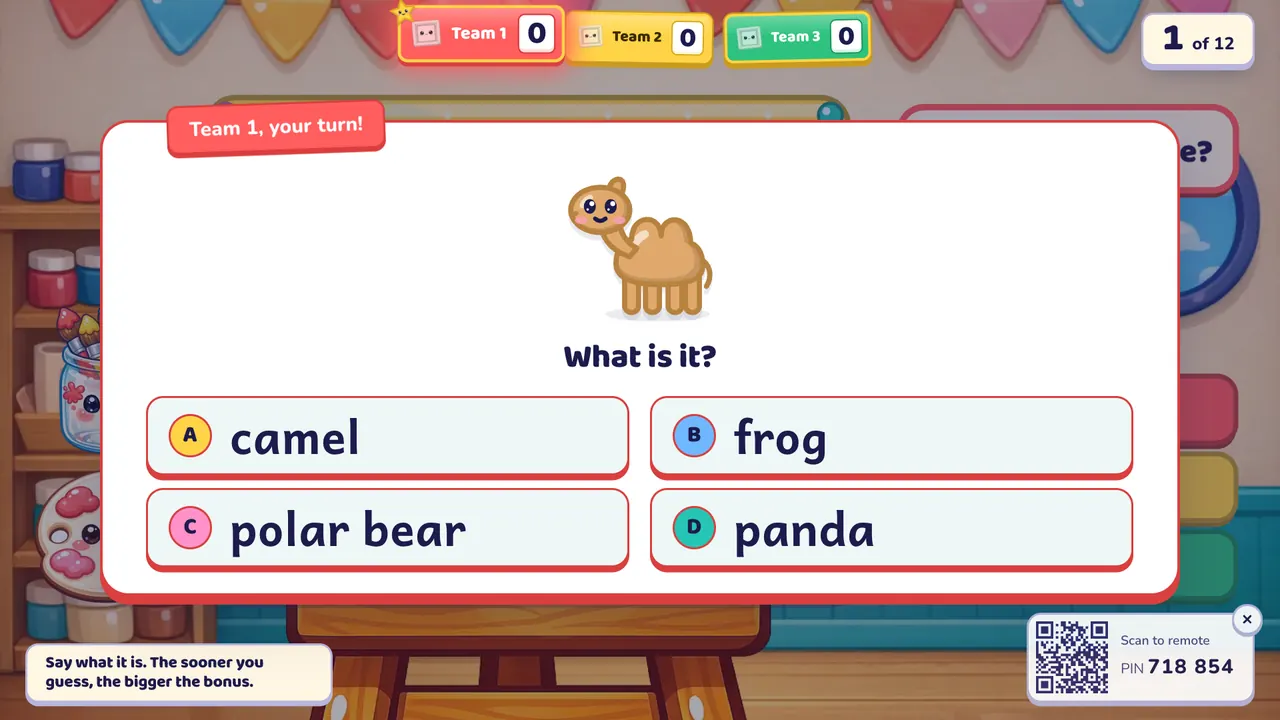
- Play. Teams take turns answering. A right answer lets the team pick a numbered piece to take off, on the screen or on your phone (1 point). At any moment when nobody is picking, a team can say what the picture is; if it is right, you tap that team's "got it" button and it wins the bonus. The rest of the pieces fly off, the word appears, and a new picture starts with the next question. A wrong answer means no piece. The team with the most points at the end wins.
Rules and scoring
- Taking off a piece: 1 point.
- Naming the picture: 2 points plus 1 for every three pieces still covering it (rounded up). With all 12 pieces on it is worth 6; with 6 left, 4; with every piece gone, 2.
- A wrong guess costs nothing. You simply don't tap the team.
- Once every piece is gone and nobody has named it, a right answer is worth 1 point until someone does.
- Double and triple questions multiply the points for a piece (not the guess bonus).
- Settings: a timer per question (off, 10, 20, 30 or 60 seconds; running out counts as a wrong answer), minus one point for a wrong answer, steal (another team may answer a missed question and take the piece), hide the score, calm or no effects.
What you can teach with it
For English, every question format works, and the hidden picture is one of the words in your set, so the guess is extra vocabulary practice.
- Animals or food at A1: picture questions, then the class names the hidden animal in English.
- Past tense verbs at A2: "Which letter is missing?" and sentence-order questions, with the picture as the prize.
For other subjects, the questions are multiple choice, true/false or open, and the hidden picture comes from your set when it has pictures with short answers, or else from Oly's own pictures, named in the class's language.
- Maths: times tables or mental arithmetic, one question per piece.
- Science: true/false facts about plants, the body or the weather.
- History and geography: capitals, dates and "who was…" questions.
Tips from the classroom
- Agree on how guesses work before you start: hands up, and you choose. Otherwise every team shouts at once.
- A team that guesses wrong can try again later. Some teachers allow one guess per team per piece to keep it fair.
- The bonus is biggest early, so a brave guess after one or two pieces is a good risk. Say so; it gets students thinking.
- With 40 students, use four teams and call a new student each turn. A class list in the lobby before the game shows the name on screen.
- If one team is far ahead, turn on steal so the others can win pieces on missed questions.
Play it without a screen
- Print a picture or draw one on the board and cover it with 12 numbered sticky notes.
- Ask a question; the team that answers right removes a note of its choice.
- Any team can guess the picture; give more points for an early guess.
- Write the scores in team columns on the board.
The screen version chooses the pictures from your lesson, works out the bonus for you, and lets you run everything from your phone.
Questions teachers ask
Is Mystery Picture free?
Yes. Playing is free, with library games and your own typed questions. The free plan also includes 10 AI question sets a month (3 from photos).
Does it work for maths or science?
Yes. Mystery Picture works with every subject: multiple choice, true/false and open questions.
Do students need devices?
No. The class plays in teams on one screen. Only your phone is used, as the remote.
How many students can play?
The whole class, in 2–4 teams on the free plan or up to 8 teams with Oly Pro.
Can a team guess when it is not its turn?
Yes. Any team can name the picture whenever nobody is picking a piece. You tap the team that got it.
Can a team lose points?
Only if you switch on "minus one point for a wrong answer". A wrong guess never costs points.
If your class likes this, try Balloon Words for English or Memory Match for any subject.